•  

    Hun balatonterace0599 blog


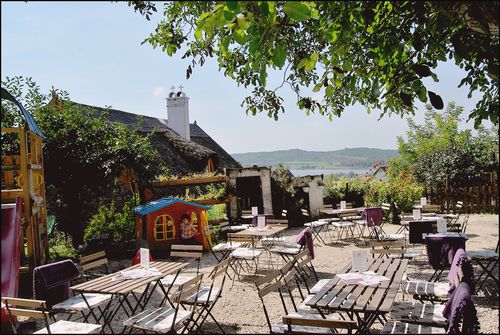
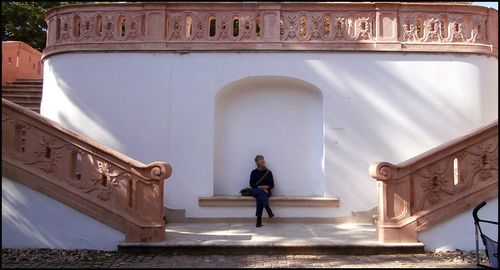
    This terrace was so inviting that we spent time there on our way into the village of Tihany,

    and we spent time there on our way out of Tihany.


    Situated on Lake Balaton it was a place to stop, slow down and smell the roses,

    and the lavender!


    Kid friendly with a wonderful view,

    it was a very special part of what became the perfect day.


    (Where's Aden?)


    Related articles

    Tihany, Hungary: Lake Balaton's Most Alluring Village
  •  

    Hung st endres umbrl0923blog


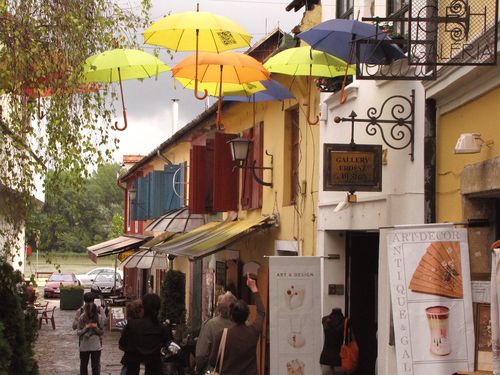
    Hungary is dotted with many charming towns,

    like this one, Szent Endres,

    situated on the banks of the Danube River.

    Once you hear the English translation, Saint Andrews,

    it is easier to remember the name.

     Forgetting the cobblestone streets and squares and shops and galleries,

    is not an option!


    (And there are my travelling companions and friends,

    just up ahead, as I stop to take yet another photo.)


  •  

    Buda beerfest0960blog


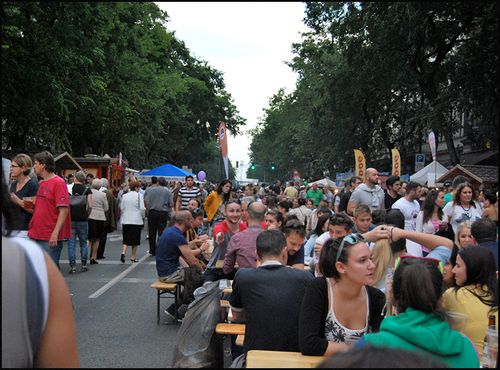
    Our last night in the city and we stumble upon a beer festival,

    a distant lightening storm,

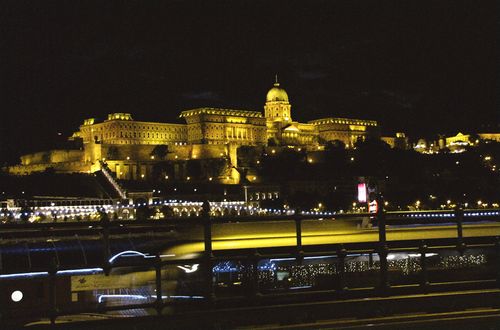
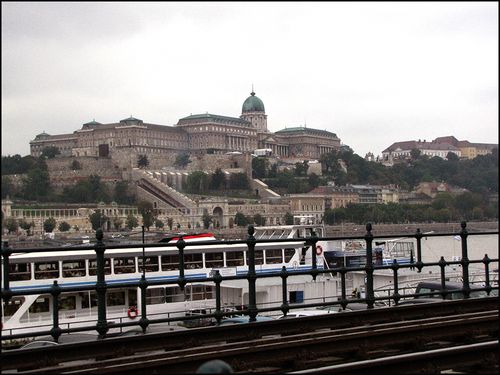
    and the yellow train whizzing by a Jazz boat in front of the Palace

    on the other side of the river.


    Budanght1521 blog


    Still livin' right!


  •  

    Budapest used to be two cities separated by the Duna, or what we call the Danube River.

    Buda is on the hilly side of the river.

    And Pest is on the plane and is the more modern section of Budapest.


    Budpest palace1222 blog


    This is the Palace in the hills.


    Budapestparlmnt1052 blog


    And this is the famous Parliament building on the Pest side of the river.


  •  

    That's "Good Morning" in Hungarian!


    Laine godllo0103blog


    Laine is back from a fabulous vacation in Hungary.

    Still jet lagged and still stoked!


    Lots more to come.

    But first, a huge THANK YOU! to Sue Harrison for her wonderful posts.

    Thanks Sue, for holding down the fort while I was away!

    You did a great job!


    Budapest blog

    Budapest


  •  


    IMG_0896W


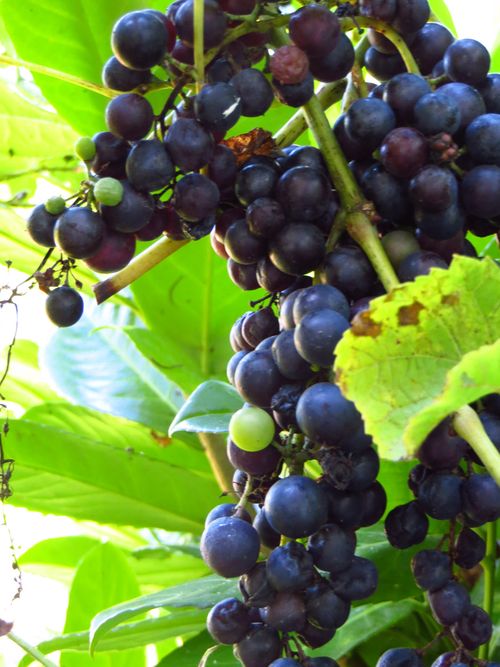
    In wine growing countries the fall is a time of great excitement as the grapes approach the time for harvesting. Each bunch of grapes swells with juice produced from the long summer days of sunshine and rain.


    The vineyard owner watches the grapes carefully to be ready for that time of optimal ripeness. Everything waits its appointed time, especially the harvest. You do not want to pick too soon and lose one scintilla of flavor or depth and you don’t want to pick too late and find you have lost some of your perfect grapes.


    And like most things, the whole issue of ripeness has its exceptions too. Some grapes are intentionally left on the vine to await the first freeze. Those wines are called ice wines and are sweet and concentrated in flavor as the water in the grape has been lost to the freeze leaving only the delicious pulp. In France some desert wines are allowed to partially suffer what they call the “noble rot,” which makes the grapes shrivel and concentrate inside. Sauterne is one such wine.


    Keep an open mind about expectations and judging. Even if a thing or situation or person is not perfect, it or he may very well turn out to be perfect in a completely different delightful and unexpected way. 


    Photo by guest blogger Sue Harrison, location Dordogne region of France.

    Related articles

    Wines of Languedoc-Roussillon provide quality for price
  •  


    IMG_1052W


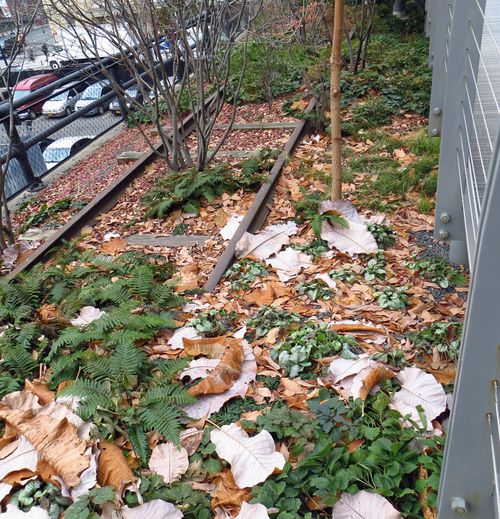
    In downtown New York City’s far west side there used to be a raised train track for the trains delivering or picking up meat and produce. Completed in 1934, it replaced a former street level train that had been the cause of many fatal accidents. So many that the city hired “cowboys” to ride horses in front on the trains and wave flags to warn cars and pedestrians.


    When the new, elevated High Line railway was constructed it ran through the middle of blocks and directly through buildings instead of along the road. This let the trains stop inside the buildings they were delivering to and from. But as years passed trucking became a better shipping option and the number of trains decreased until the line was abandoned. The last cargo was three railcars of frozen turkeys in 1980.


    But the High Line wasn’t finished. Parts were torn down and sold but much of the line remained like a largely unnoticed specter floating over busy lower Manhattan. Despite efforts to tear it all down, a group of devoted fans managed to finally convince the city in 2004 to turn it into a park.


    Currently it runs about a mile, starting three blocks below 14th Street at Gansevoort Street and ending at 30th Street but another section north of that is in the works for the future. 


    New Yorkers and visitors walk along pathways that sometimes include the rails of the former tracks and sometimes the rails run alongside with trees and flowers muscling into the rocks and wooden ties.


    Change is inevitable. We never know what it will be. Sometimes a thing can look so permanent, like a big set of railroad tracks but it takes very little time for nature to take over. Other times things seem abandoned and cast aside but with enough care they turn into something else.


    Take nothing for granted. Things may not be what they appear to be and tomorrow they may be completely different.


    Photo by guest blogger Sue Harrison, location NYC.


    Related articles
    The High Line's Final Section Will Open This Month
  •  


    IMG_0383W


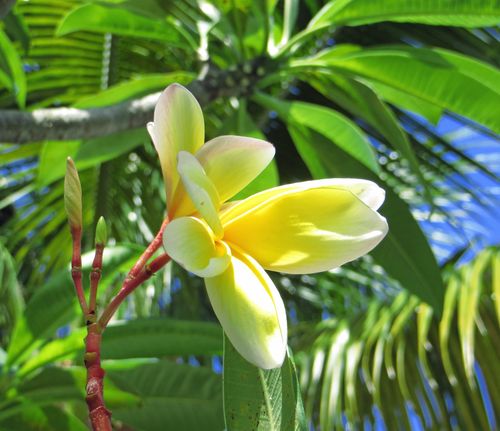
    What an odd plant the frangipani. It seems backward in making flowers before leaves but it seems to work.


    Also known as plumeria it has long pointed oval-shaped leaves and flowers of delicate beauty and intense scent. It grows in tropical and subtropical areas including parts of Florida.


    Out of season the plumeria is like a child’s drawing of a tree, a trunk and several limbs all the same size. Then the flowers and a few leaves come bursting from all over the barren trunks. And after most of the blooming is done a big crop of leaves finally fills in the tree.


    The flowers are used to make perfume and incense. In Hawaii they are strung together to form beautiful leis and women traditionally wear one behind their left ear to show they are taken and behind the right ear if looking for love.


    The flowers’ scent has a practical use. It lures the Sphinx moth to it for pollination. There is no nectar but the moth doesn’t know that and goes from flower to flower searching for that succulent sip of sweetness that never materializes. Hopefully the moth has other places to dine.


    Unlike the moth, we require no nectar, we just can enjoy the beautiful flowers and heavenly scent they send wafting through the air.


    Photo by guest blogger Sue Harrison 


    Related articles

    Fun Flower Facts: Plumeria
    Frangipani Plumeria Flowers
  •  


    IMG_2433W


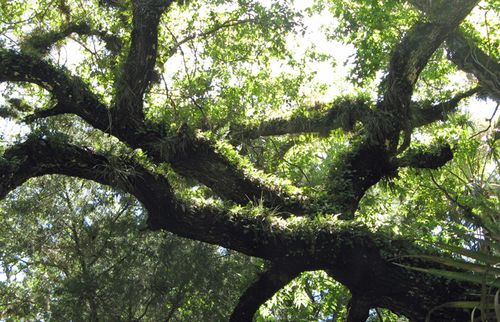
    If you look up into the sprawling limbs of the big oaks in north Florida you will see something that looks like dried up ferns. And in fact, that’s what they are. But these are not regular ferns, these are resurrection ferns.


    It’s an epiphytic plant, one that attaches to another plant and takes its nutrients directly from the air and any rain that falls on it. You can find this fern as far north as Delaware and as far west as Texas.


    What is amazing about them is that when there is no rain, instead of dying like most plants do they just curl up and wait. They turn brown and roll their fronds ups looking as if they have lost the battle. But give them rain, just a little bit, and they uncurl and turn vibrant green again. 


    Most plants die when they lose between 8 and 12% of their water. The resurrection fern can lose 97% of its water and survive. It is said, though who knows if it’s true, that the resurrection fern can go 100 years without water and spring back to life after one brief shower.


    Remember, when life puts you through a hard dry period that everything special about you is still there, just under the surface. All you need is a little rain and you will unfurl and stand tall in the wind again. 


    Photo by guest blogger Sue Harrison


  •  


    IMG_1152W


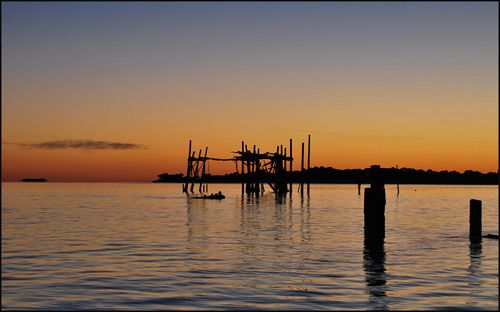
    All across south Florida large flocks of ibis, like their cousins around the world, come home at sunset to nest in the same trees. During the night they stay low on the branches, hidden from hawks and other predators. But as dawn approaches they move ever higher in the trees until finally, backlit by the pale pearl wash of imminent sunrise they appear as silhouettes perched on impossibly thin branches.


    When the sun crosses the horizon and the light is at just the right spot, and only they know when that is, the birds lift their ungainly selves into the air and fly together in a single direction. Usually one bird jumps into flight and within seconds, dozens or hundreds are right behind it.


    They are going to feed but who knows how they decide which way all of them are going to go each day? Do they return to where they were the day before and slowly work their way across the landscape or, what?


    The ancient Egyptians fashioned their god, Thoth after the ibis. Thoth was responsible for writing, mathematics, measurement, the moon, magic and time. As if proving the Egyptians were right, the ibis still knows the exact moment to begin and end the day. 


    Photo by guest blogger Sue Harrison, taken in Fort Lauderdale, Fla.

    Related articles

    He who watches over me as I write
    If you meet a time-traveling ancient Egyptian, talk about birds

Lainesblog Thinking Out Loud

Designed with WordPress